LIVE
Network Radio
From the outside a radio show looks like the easiest job in broadcasting. Someone talks, someone plays a record, the clock moves. Three hours later it is done. There is no camera, no set, no crew standing around. Just a desk and a voice.
The reality is a little busier than that, and a lot of it happens before the microphone is even switched on.
Most of our presenters build the skeleton of a show well in advance. Not a script, nobody here works from a script, but a shape. Which records anchor the hour. Where the news sits. What has happened in the world that makes a particular song land differently today than it would have last week.
That last part matters more than people expect. Music on the radio is not just a playlist running in order. A track that feels warm on a grey Tuesday afternoon can feel completely wrong on a bright Saturday morning. Part of the job is reading the day and deciding what the hour needs.
A three hour slot is not really three hours. It is a series of short blocks, each one framed by a top of the hour marker, a news window, or a station ident. Presenters learn to think in those blocks rather than in the whole show, because that is how the audience experiences it. Very few people listen to all three hours. Most catch forty minutes on a commute and form their entire opinion of the show from that.
So each block has to stand alone. A strong opening record, a reason to stay, something that pays off before the listener arrives at work. Do that twelve times in a row and you have a show.
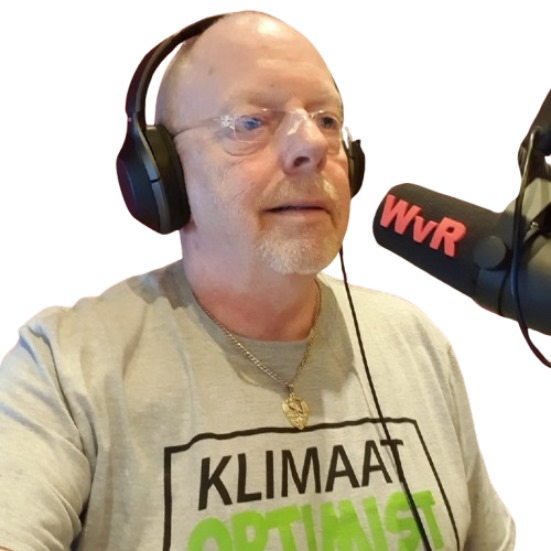
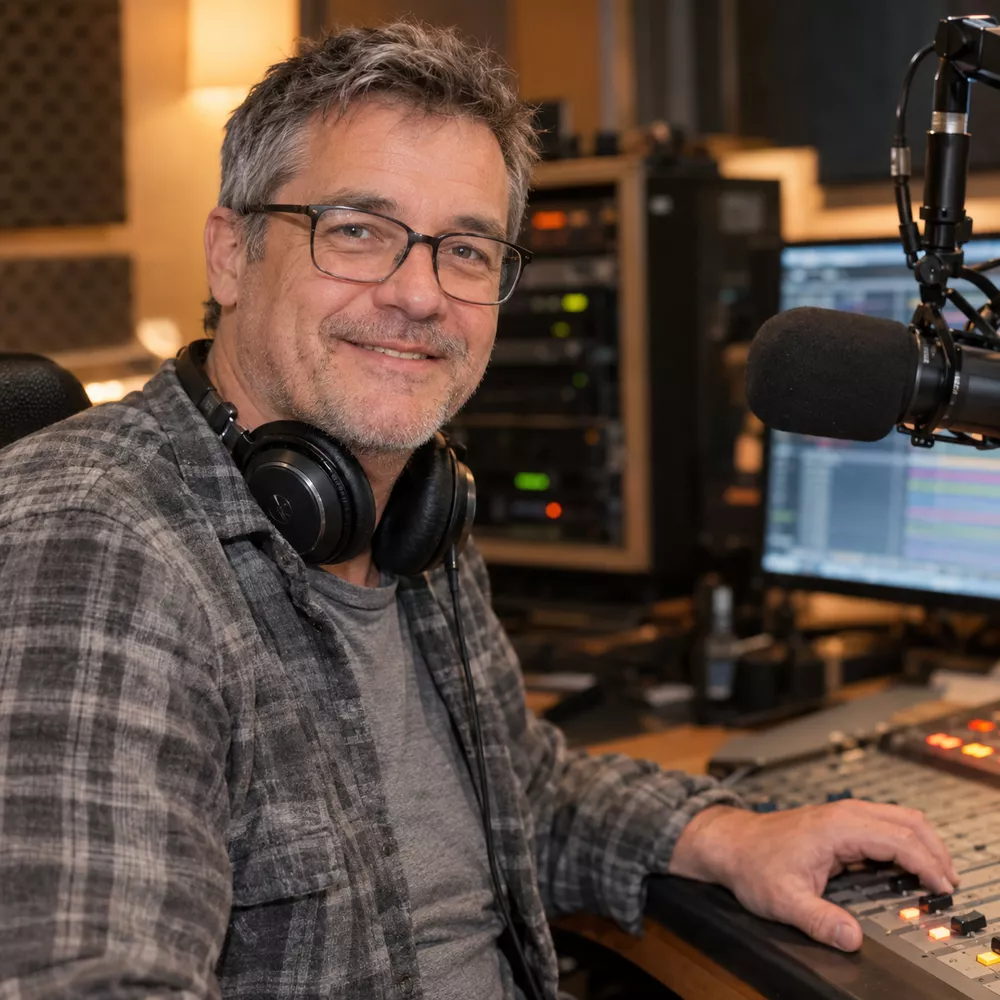
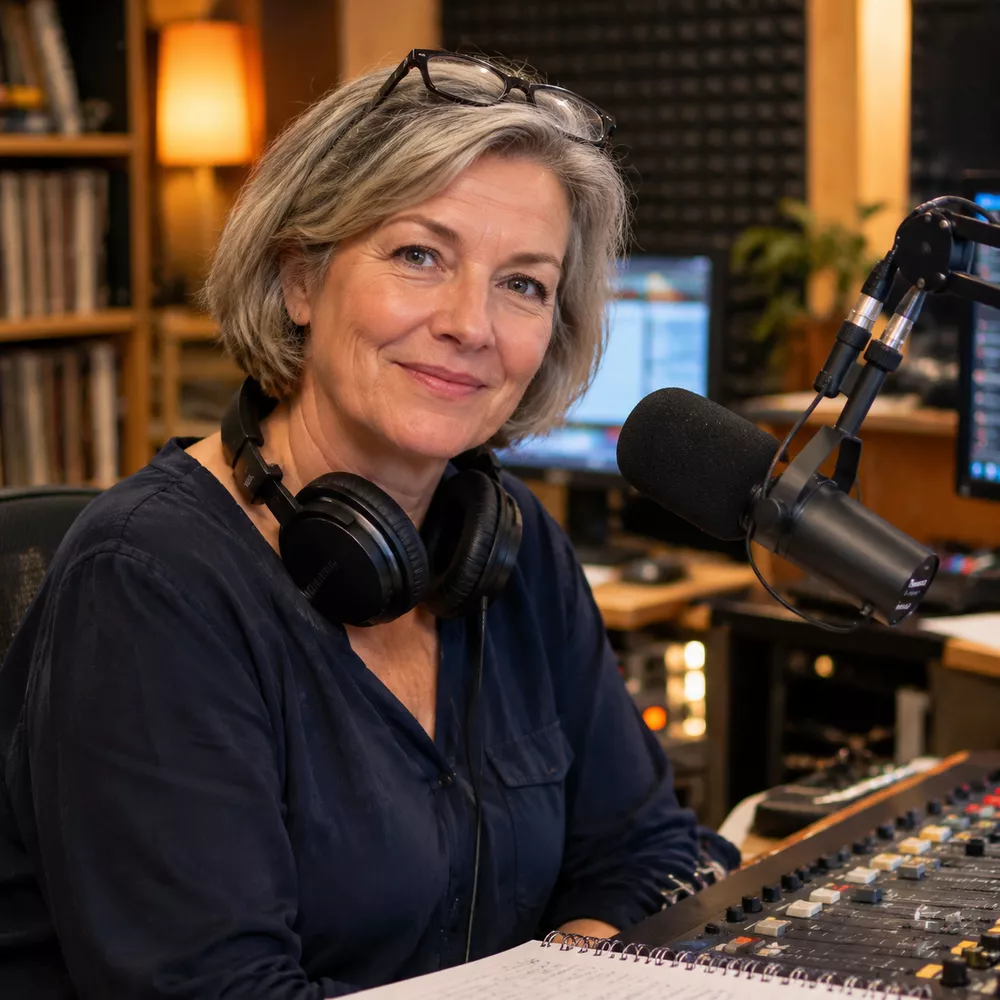
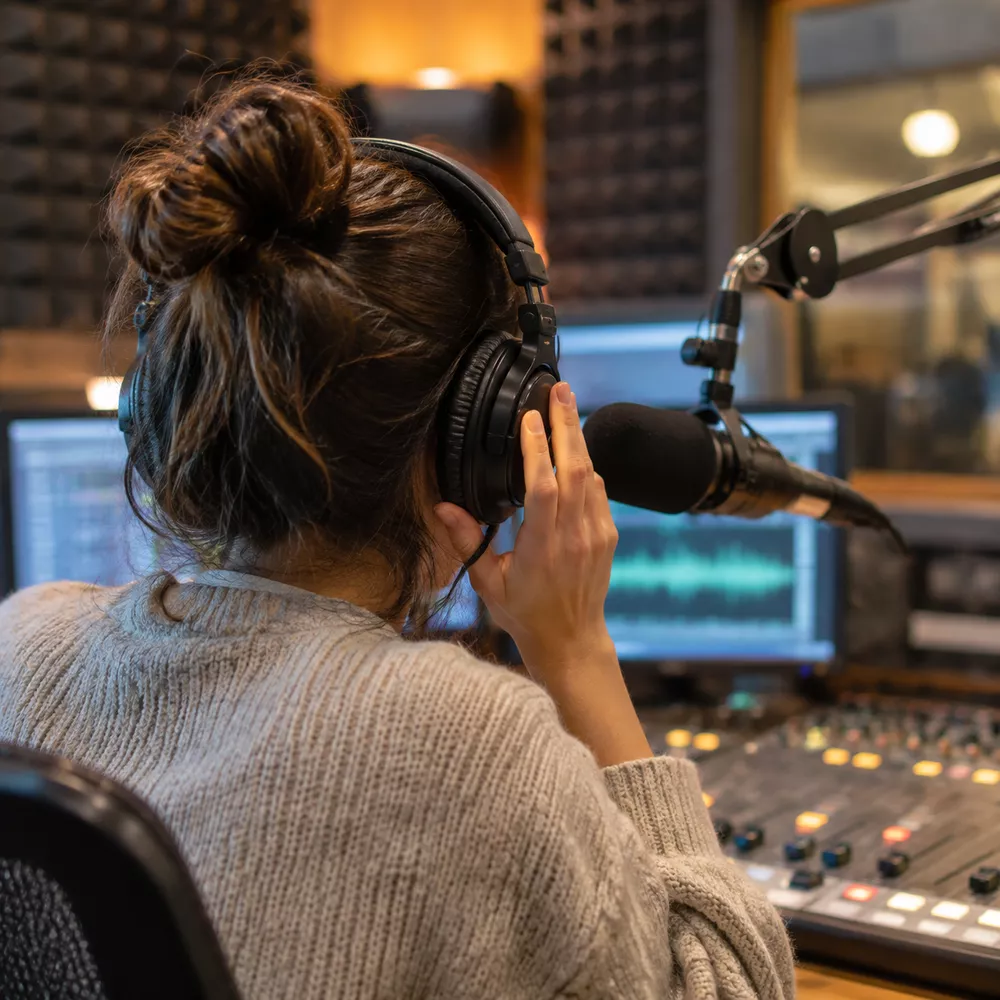
The equipment is less glamorous than the myth suggests. A mixing console with faders for the microphone, the music playout, the phone line and a spare input. Headphones, because a presenter has to hear themselves in a way the room cannot provide. A screen with the playout system and another with the running order. A microphone on a boom arm that everyone eventually learns not to knock.
The skill is not in operating any of it. The skill is in operating all of it while talking, watching the clock, reading an incoming message and deciding in real time whether the next record still works.
The hardest habit to build is also the most important. A presenter is speaking to one person, not to an audience. The studio is empty, the numbers say thousands are listening, and the instinct is to address a crowd. That instinct produces the stiff, announcing, slightly false voice you hear on stations that have not worked this out.
Good radio sounds like one person talking to one person. Our presenters get there by different routes. Some picture a specific listener. Some just refuse to raise their voice. Fenna does it by treating a guest as a guest rather than as content. Joost does it by slowing down until it would be strange to shout.
It goes wrong regularly. A track fails to load, a guest does not call in, a presenter starts a sentence with no idea how it ends. Live radio has no undo. What separates a comfortable show from an uncomfortable one is whether the presenter treats the mistake as a disaster or as a thing that just happened.
The listeners who notice usually enjoy it. The ones who do not notice were never going to. Either way the clock keeps moving and the next record is already queued.
At the end of the slot the presenter hands to the next show, takes the headphones off, and the room goes quiet in a way that is genuinely strange the first few times. Three hours of talking to one imaginary person, and then nothing.
And then, usually the same evening, they start building the shape of tomorrow.